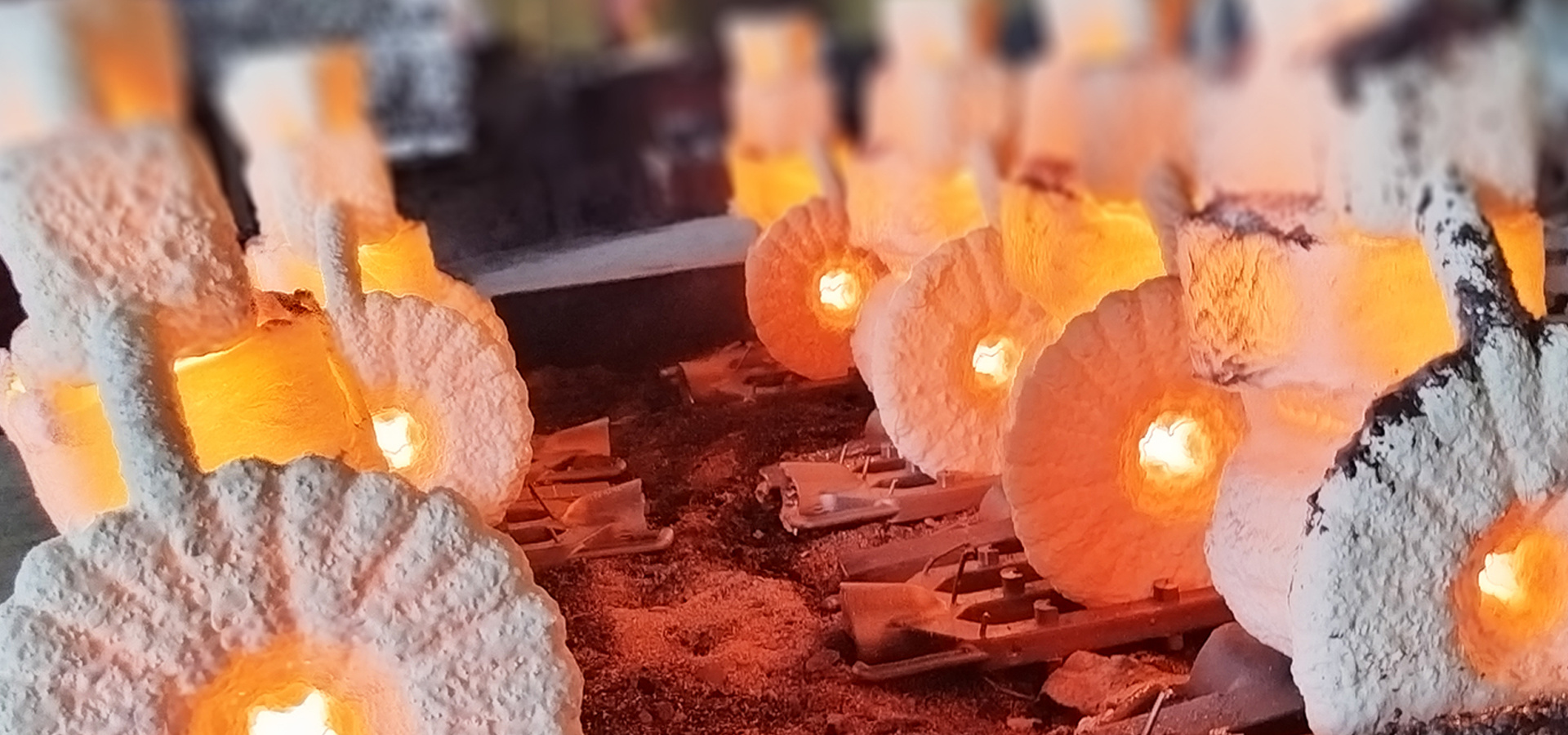
VDV maintains high standards for strict quality control and promises to strictly observe the delivery schedule.
MORE +
There are two major categories of lost wax casting: solid mold and ceramic shell mold. The ceramic shell mold is a modified method from solid mold.
MORE +
VDV provides rough stainless steel precision castings for numerous well-known global companies and has been recognized as an outstanding supplier multiple times.
MORE +
Investment casting can apply any material and more flexible of production capacity.
MORE +
All our endeavors are geared towards becoming your premier provider of precision castings!
MORE +
Argon shielding (purity ≥99.999%), ER316L filler wire, post-weld grinding to Ra ≤6.3 μm.
MORE +Unveiling the Magic of Precision Casting: How It Works
Release time:
Oct 10,2025
What is Precision Casting?
Precision casting, often referred to as investment casting, is an intricate process that transforms molten metal into elaborate shapes with stunning accuracy. Imagine crafting a piece of art, but instead of paint, you're using metal! This method allows for intricate designs and fine details that are hard to achieve with traditional methods.
The Basics of How It Works
Now, let's dive into the nitty-gritty. Precision casting starts with creating a wax model of the desired part. This model is coated in a ceramic material, then heated to melt away the wax, leaving a hollow mold. Once the mold is ready, molten metal is poured in. Voilà! After cooling, the mold is broken away, revealing the perfectly cast part. It's like magic, but with a scientific twist!
Step-by-Step Breakdown
- Model Creation: A wax model is crafted with meticulous attention to detail.
- Mold Making: The model is coated in a ceramic shell and heated to remove the wax.
- Metal Pouring: Molten metal is poured into the mold, taking its shape.
- Cooling and Finishing: After cooling, the mold is broken away, resulting in a finely cast metal part.
Why Choose Precision Casting?
So, why go for precision casting over other methods? Well, it's all about that sweet spot of accuracy and efficiency. Manufacturers love it because:
- Complex Designs: It allows for intricate designs that would be impossible with other methods.
- Minimal Waste: The process is efficient, leading to less waste of raw materials.
- High Tolerance: The final product has a high dimensional tolerance, which is crucial for many applications.
Applications in the Real World
Precision casting is everywhere, from aerospace components to medical devices. If you've ever marveled at the precision of a jet engine or a surgical tool, chances are precision casting played a role in its creation. It's a linchpin in industries where precision is paramount.
The Future of Precision Casting
With advancements in technology, precision casting is only going to get better! Innovations like 3D printing are making it easier to create complex molds, pushing the boundaries of what's possible. The future looks bright, and it's exciting to think about what's next!
Wrapping It Up
In a nutshell, precision casting is an incredible manufacturing process that combines art and science. Whether you're an engineer, a hobbyist, or just someone curious about how things are made, understanding the workings of precision casting opens up a whole new world. So next time you see a finely crafted metal part, you'll know the magic behind it!
Related News
Welcome Alfa Laval‘s Expert Guidance Visit
Aug 10,2025
Welcome SPX leaders to visit and guide us
May 22,2025
Warmly welcome GEMU leaders to visit
Aug 09,2025
Tel:
E-mail:
Address:
Dazhuge Industrial Park Licha Town Jiaozhou Qingdao CHINA


Message